TIAL LASER CLADDING COATINGS ON Ti6Al4V: TRIBOLOGICAL CHARACTERIZATION
DOI:
https://doi.org/10.5281/zenodo.10032037Abstract
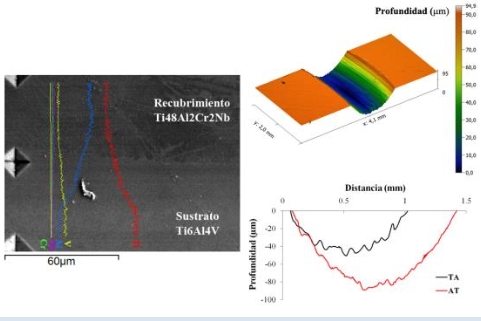
The Ti6Al4V has proven an important engineering alloy due to its good properties such as the excellent strength, weight ratio, high corrosion resistance and biocompatibility. However, the alloy is susceptible to mechanical degradation in applications involving sliding wear or abrasion. In order to improve wear resistance has been deposited by laser cladding on Ti6Al4V alloy a titanium-aluminum intermetallic alloy. For the realization of coatings different process parameters, such as laser power, scanning speed, powder feeding rate and the preheating temperature were optimized. The microstructure of the coatings was evaluated using optical microscopy (OM), scanning electron microscopy (SEM) and X-ray diffraction (XRD). Furthermore tribological properties were obtained, using a ball on disk tribometer, with Al2O3 ball, constant speed of 0.1 m/s, 10 N load at temperature 24 °C and 500 °C. We evaluated 3D surface topography obtained by the wear scar with an inductive contact profilometer and calculating from it the volume removed and the wear rate. The microstructure of the coatings consists of γ-TiAl phase and α2-Ti3Al. The wear test results at room temperature show a lower wear rate for the coatings compared to the substrate. At high temperature the coatings have a higher friction coefficient and a higher rate of wear is obtained when compared with the substrate. The coatings have good metallurgical bond, although the presence of cracks and the different wear mechanisms have an influence on the wear resistance at elevated temperatures.Downloads
Download data is not yet available.
Downloads
Published
2015-08-05
How to Cite
Zambrano, J. C., Cárcel, B., Pereira Falcón, J. C., & Amigó, V. (2015). TIAL LASER CLADDING COATINGS ON Ti6Al4V: TRIBOLOGICAL CHARACTERIZATION. LatinAmerican Journal of Metallurgy and Materials, 45–53. https://doi.org/10.5281/zenodo.10032037
Issue
Section
Regular Articles
License
The authors of papers accepted for publication by the RLMM, should recognize the complete transfer of copyright (in all languages) to the RLMM. This transfer includes the right by the RLMM to adapt the article for digital or printed reproduction without altering the written content and information displayed in tables or figures within. The authors retain the copyright and guarantee the journal the right to be the first publication of the work as well as licensed under a Creative Commons Attribution License 4.0 Internacional (CC BY 4.0) which allows others to share the work with an acknowledgment of the authorship of the work and the initial publication in this journal.